A Runner's Nightmare
Jürgen Weber, a 55-year-old mechanical engineer from Munich, had completed 18 marathons — including a sub-3:00 personal best at 42. Running was his identity. But bilateral knee osteoarthritis, first diagnosed at 48, had progressively stolen his stride. By 2024, both knees were Kellgren-Lawrence grade III with bone-on-bone contact in the medial compartments. Every step was painful.
Too Young for Replacement
His Munich orthopedist was direct: "You need bilateral total knee arthroplasty within two years." But Jürgen was only 55. Knee implants last roughly 15-20 years — meaning he would face a revision surgery in his 70s, a far more complex procedure with worse outcomes. He wanted to delay replacement as long as medically reasonable.
The Regenerative Option
Jürgen had read about autologous mesenchymal stem cell (MSC) therapy — harvesting the patient's own stem cells from bone marrow, expanding them in a laboratory, and re-injecting them into the damaged joint. Early-stage clinical trials showed promising cartilage regeneration in grade II-III OA. However, the procedure was not approved in Germany under standard insurance, and the few private clinics offering it charged $25,000 per knee.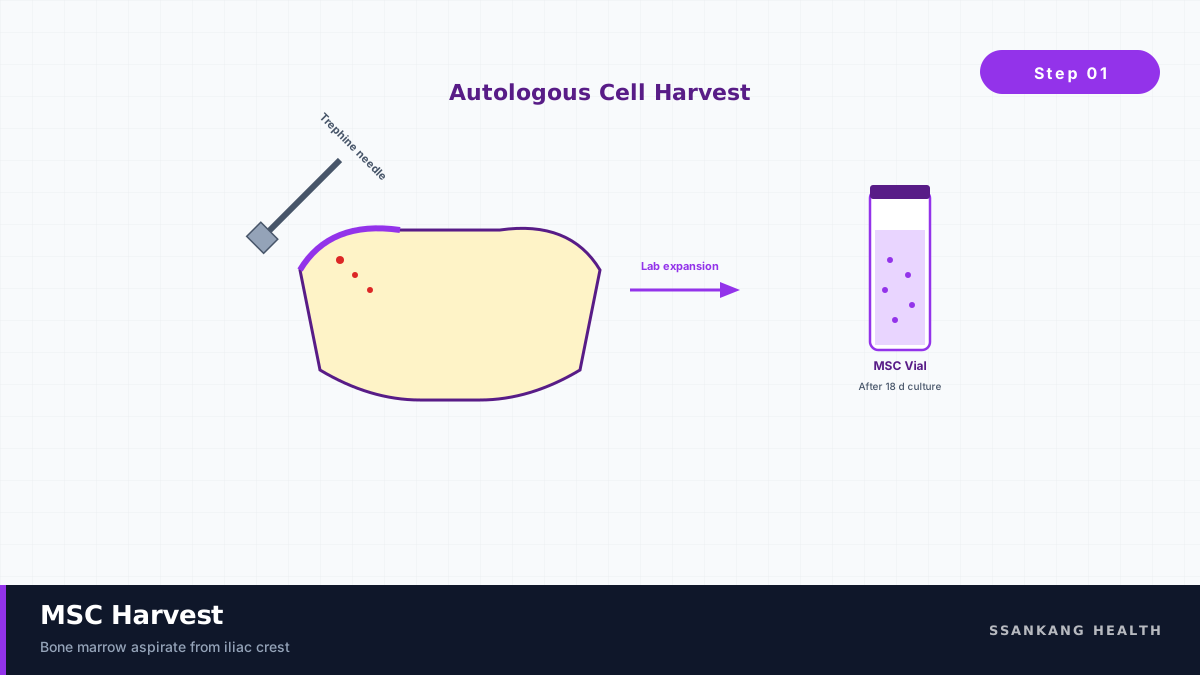
Through a German expatriate forum, Jürgen found SSAnkang and was connected to a Beijing sports medicine center with a CFDA-approved MSC protocol and a dedicated joint-preservation program.
The Procedure
Week 1: Bone marrow aspirate from the iliac crest under local anesthesia (outpatient, 30 minutes). The aspirate was sent to the hospital's GMP-certified cell culture lab. Weeks 2-3: MSC expansion (the cells were cultured for 18 days to reach therapeutic concentration). During this waiting period, Jürgen underwent daily physiotherapy: pool-based exercise, targeted quadriceps and hamstring strengthening, and anti-inflammatory protocols. Week 4: Bilateral intra-articular MSC injection under ultrasound guidance, combined with PRP (platelet-rich plasma) to enhance engraftment.
The Waiting Game
MSC therapy is not an overnight fix. The first three months involved gradual improvement. Jürgen tracked his progress methodically (as an engineer would): VAS pain score dropped from 7/10 at baseline to 4/10 at month 1, 3/10 at month 2, and 2/10 at month 3. At the 3-month MRI, the radiologist noted improved cartilage signal intensity in the medial compartments bilaterally — not new cartilage yet, but signs of repair activity.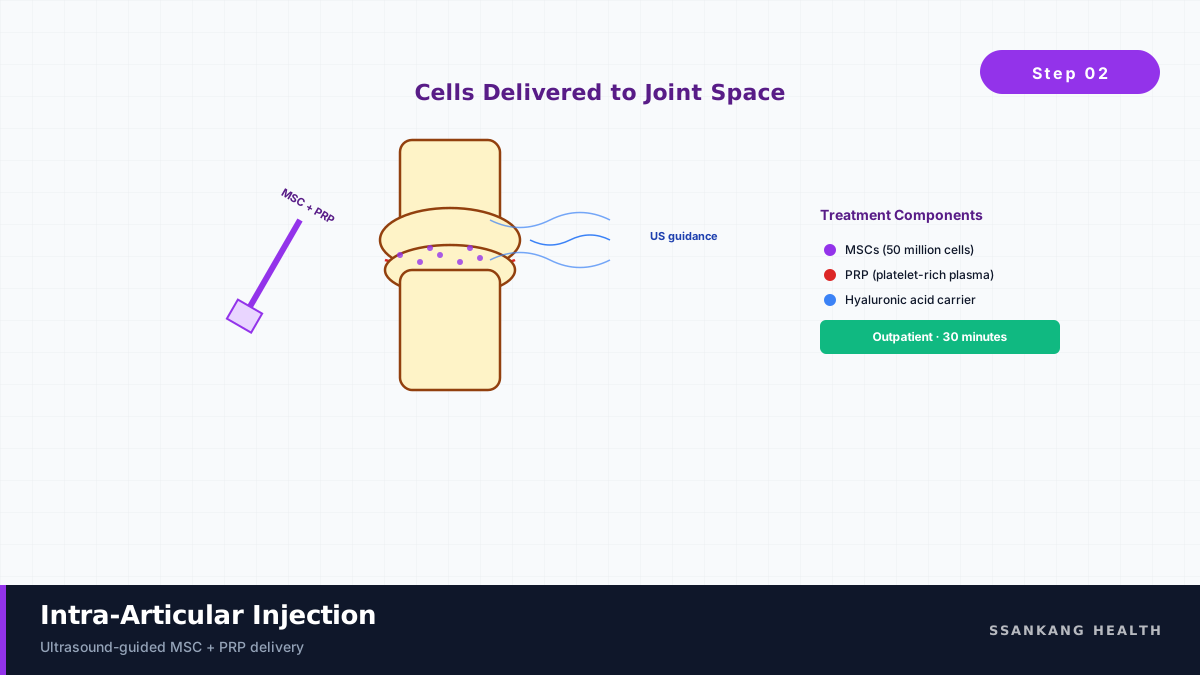
One-Year Results
VAS pain: 2/10 on stairs, 0-1/10 on flat ground. Jürgen was running 10K three times per week (not marathons — his surgeon advised against it). He climbed stairs without hesitation, knelt without wincing, and reported that his quality of life had returned to what it was five years earlier.
The Honest Assessment
Jürgen's Beijing surgeon was transparent: MSC therapy is not a cure. The effect may last 3-5 years before repeat treatment is needed. Eventually, he will likely still need knee replacement — but every year delayed is a year of active life gained, and a year closer to improved implant technology. For Jürgen, that trade-off was worth it.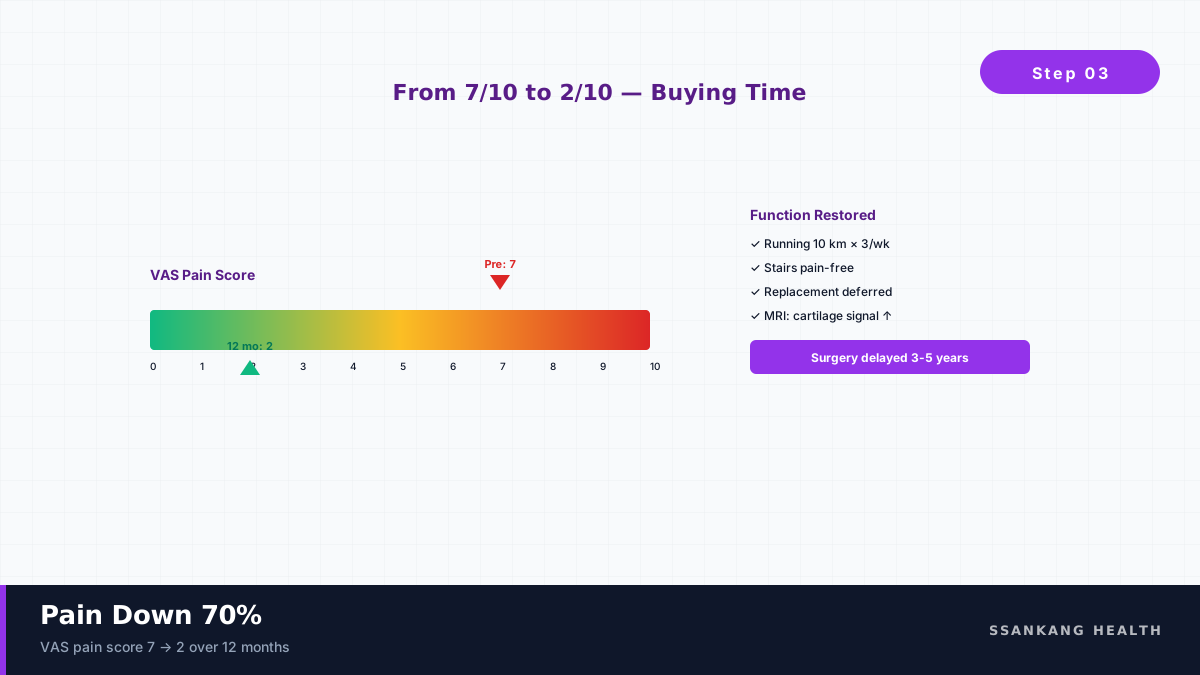
Cost: $8,500 for bilateral MSC therapy including bone marrow harvest, cell culture, PRP, injections, and 4-week physiotherapy program. In Munich: $25,000 per knee privately, or unavailable through insurance.