A Non-Smoker's Diagnosis
Budi Santoso, a 61-year-old textile manufacturer from Jakarta, had never smoked a cigarette. When a persistent cough lasting three months led to a CT scan, the finding was devastating: a 5.8 cm mass in the right upper lobe with mediastinal lymphadenopathy. Biopsy confirmed squamous cell non-small-cell lung cancer (NSCLC), stage IIIB.
Molecular Profiling
Comprehensive genomic profiling in Jakarta revealed: EGFR wild-type, ALK/ROS1 negative (ruling out targeted therapy), but PDL1 TPS of 60% — making him a strong candidate for immunotherapy. Tumor mutational burden (TMB) was intermediate. This was actually good news: the high PDL1 expression meant his immune system had the potential to attack the cancer if the right checkpoint inhibitor was deployed.
The Treatment Gap
Budi's Jakarta oncologist could offer carboplatin/paclitaxel chemotherapy alone — standard of care, with a median progression-free survival of about 5-6 months. At the time, pembrolizumab (Keytruda) was not widely available in Indonesia outside of limited clinical trials. His oncologist was transparent: "With chemo alone, we're looking at 12-16 months median survival. With immuno-chemo combination, published data shows 22+ months. I can't offer you the combination here."
SSAnkang and the Shanghai Option
SSAnkang arranged a remote tumor board at a Shanghai comprehensive cancer center. The board confirmed Budi as a strong candidate for pembrolizumab plus carboplatin plus nab-paclitaxel — the KEYNOTE-407 regimen that had become standard of care worldwide for squamous NSCLC with high PDL1.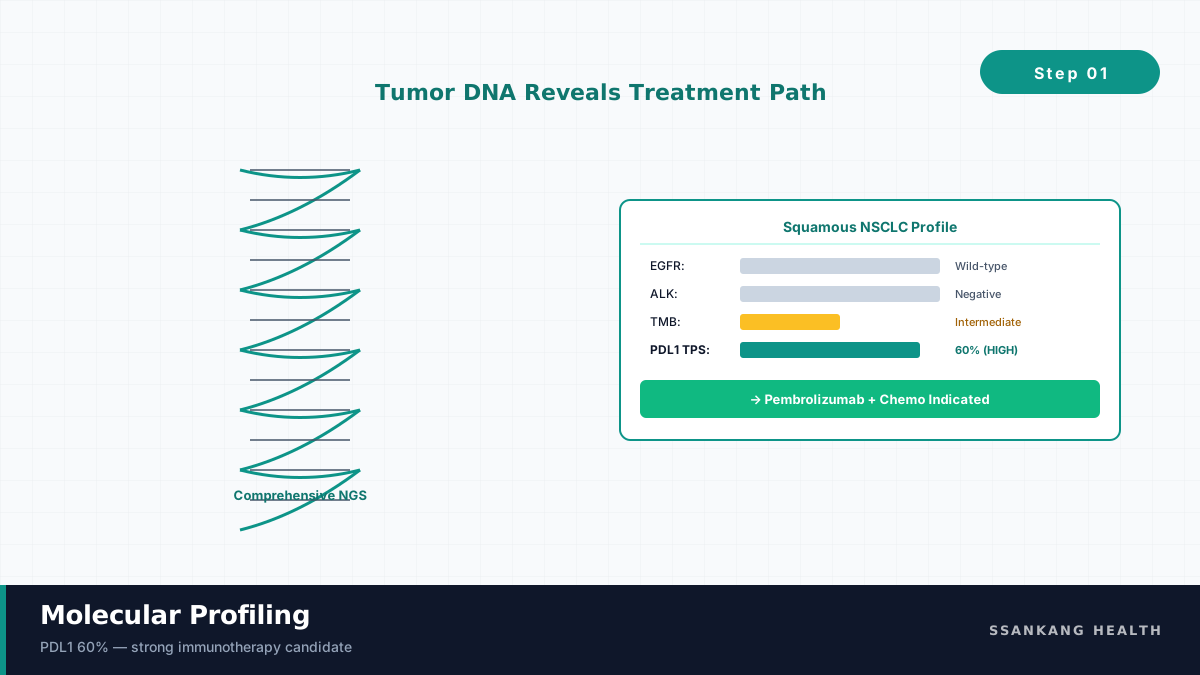
Treatment in Shanghai
Cycles 1-2 (3 weeks each): Administered in Shanghai. Budi tolerated treatment well — grade 2 fatigue, grade 1 nausea, no immune-related adverse events. Imaging after cycle 2: 40% tumor shrinkage per RECIST criteria — partial response. The medical team and Budi's family were encouraged.
Cycles 3-4: Continued in Shanghai. Added palliative radiation (5 fractions) to a chest wall lesion causing discomfort. By cycle 4, total shrinkage reached 52%.
Maintenance Phase
After four combination cycles, Budi transitioned to pembrolizumab monotherapy every 3 weeks. SSAnkang coordinated a split-care model: alternating infusions between Shanghai (every 2nd cycle) and a Jakarta hospital that had recently gained access to pembrolizumab. This reduced his travel burden while maintaining continuity of care with his Shanghai oncologist via video reviews.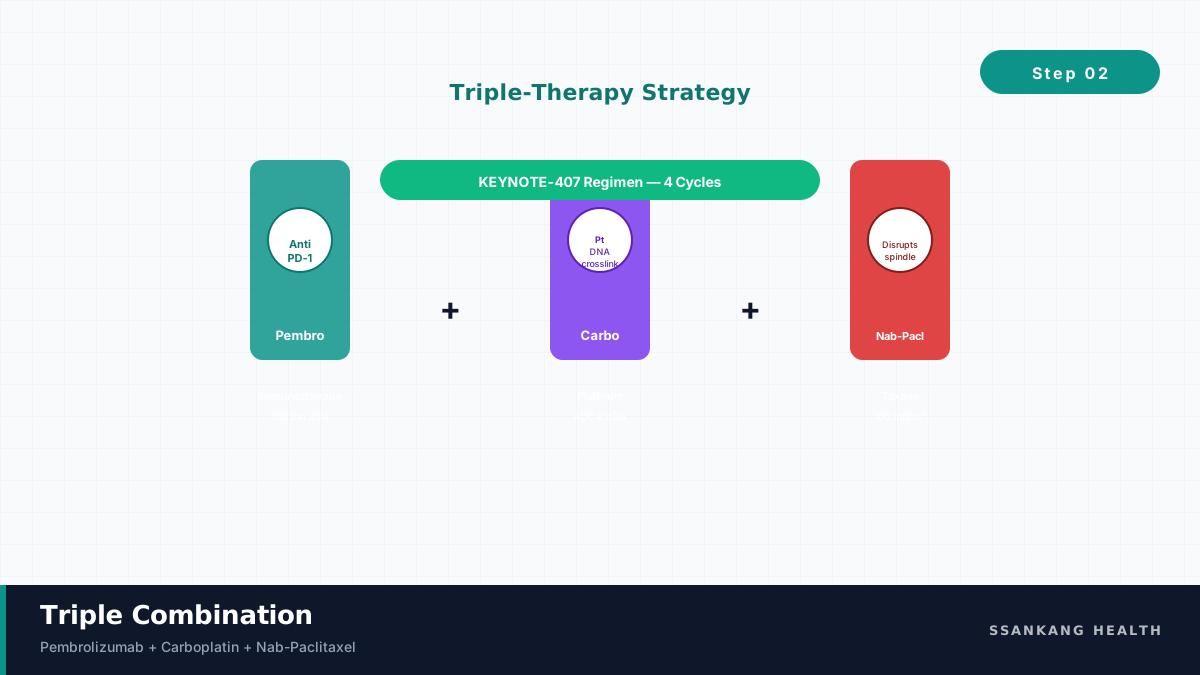
Twelve-Month Assessment
CT scan: stable partial response maintained. No progression. Performance status ECOG 1 — Budi was working part-time at his textile company, traveling domestically, and maintaining an active social life. His immune-related side effects remained manageable: grade 1 hypothyroidism (managed with levothyroxine) and mild skin rash.
The Access Story
Budi's case highlights a reality of global oncology: the treatment that can extend life exists, but geography determines access. Without SSAnkang and the Shanghai connection, his only option was chemotherapy alone — likely halving his expected survival time.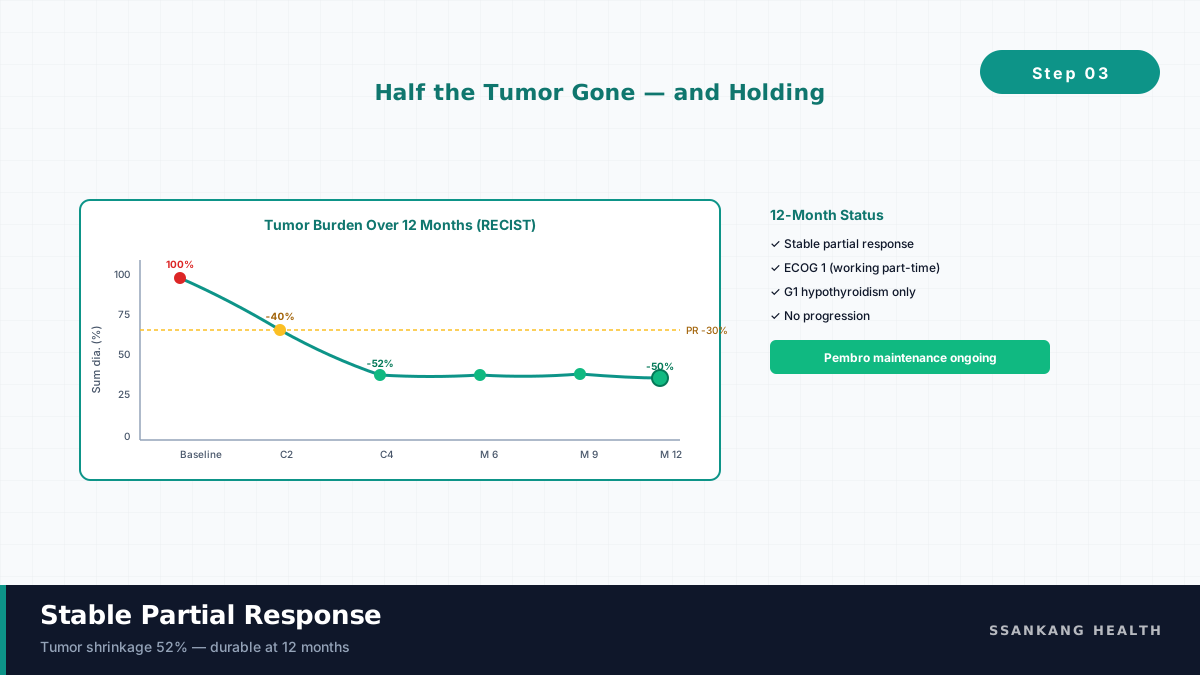
Total cost for 12 months of treatment in Shanghai (pembrolizumab, chemotherapy, imaging, radiation, consultations): approximately $62,000 USD. Estimated US cost for the same regimen: $250,000+. Budi's Indonesian insurance covered a portion of his domestic pembrolizumab infusions, further reducing out-of-pocket expense.