A Diagnosis at Birth
Nurlan was born in Almaty, Kazakhstan, with a heart murmur detected during his newborn examination. Echocardiography confirmed a large perimembranous ventricular septal defect (VSD) measuring 12 mm. The cardiologist recommended watchful waiting for the first year, as some VSDs close spontaneously. Nurlan's did not.
Growing Up with a Hole in His Heart
By age 3, Nurlan showed failure to thrive: his weight was in the 5th percentile for age, he fatigued quickly during play, and he had been hospitalized twice for pneumonia. Echocardiography showed moderate pulmonary hypertension — his small body was struggling with the extra blood flow through the hole between his ventricles.
The Surgical Recommendation
Both the Almaty children's hospital and the national cardiac center in Nur-Sultan recommended median sternotomy with cardiopulmonary bypass to patch the VSD. The parents — Aigerim, a teacher, and Daulet, an engineer — were terrified at the thought of their 4-year-old undergoing open-heart surgery. The Nur-Sultan center had a 6-month waiting list.
A Less Invasive Path
Searching for alternatives, Aigerim found SSAnkang Health through a Kazakh medical tourism forum. SSAnkang arranged for Nurlan's echocardiography images and reports to be reviewed remotely by a pediatric interventional cardiologist at a leading Beijing children's heart center. The specialist confirmed that the VSD anatomy — perimembranous, sufficient rim, adequate distance from the aortic valve — made it amenable to transcatheter device closure.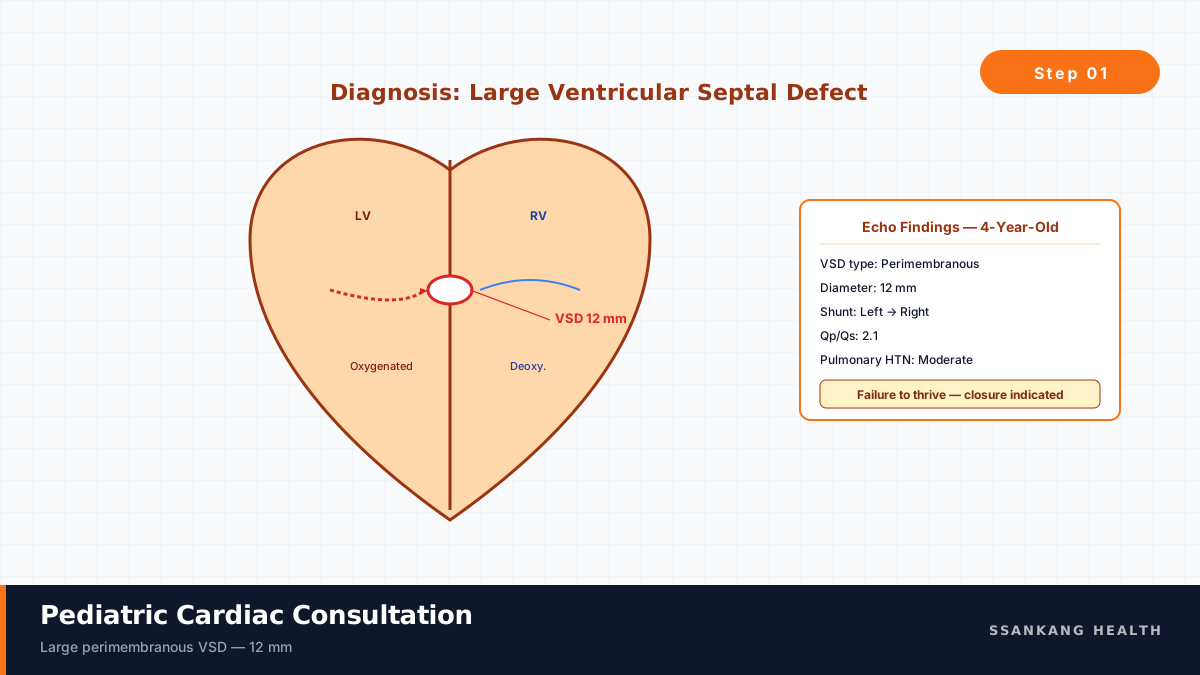
Travel to Beijing
Visa invitation letters were issued within three days. Nurlan flew from Almaty to Beijing with both parents, a four-hour flight. SSAnkang's case manager, fluent in Russian, met the family at the airport and settled them into a hotel adjacent to the hospital.
The Procedure
Under general anesthesia, the interventional cardiologist accessed Nurlan's femoral vein and guided an Amplatzer-type occluder device to the VSD under transesophageal echocardiography (TEE) guidance. The device was deployed and released in 45 minutes. TEE immediately confirmed the device was stable with no residual shunt and no interference with the aortic or tricuspid valves.
A 48-Hour Turnaround
Nurlan woke up in the recovery room and asked for juice. Overnight observation showed stable vitals, no arrhythmia, and a small groin bandage that barely bothered him. Morning echocardiography confirmed excellent device position with complete closure. He was discharged before noon — and spent the afternoon running around the hospital garden, to his parents' tearful amazement.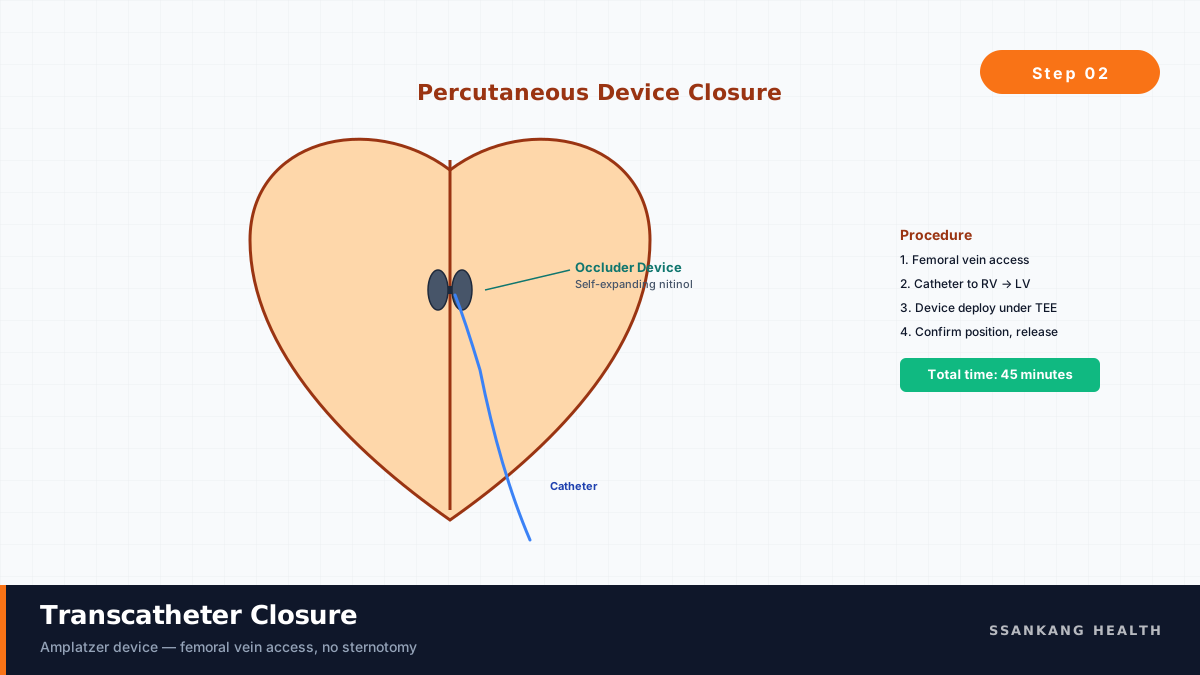
Follow-Up
Six-month echocardiography back in Almaty: complete closure confirmed, right ventricular pressure normalized, no device migration. At the one-year check, Nurlan had jumped from the 5th to the 35th weight percentile. He was running, climbing, and keeping up with his kindergarten classmates for the first time.
Reflection
Total cost including the device, procedure, anesthesia, 1-night hospital stay, and follow-up echo: approximately $12,000 USD. The same device closure in Turkey was quoted at $35,000; open-heart surgery in Nur-Sultan was covered by national insurance but carried the burden of sternotomy, a 10-day hospital stay, and months of restricted activity for a 4-year-old.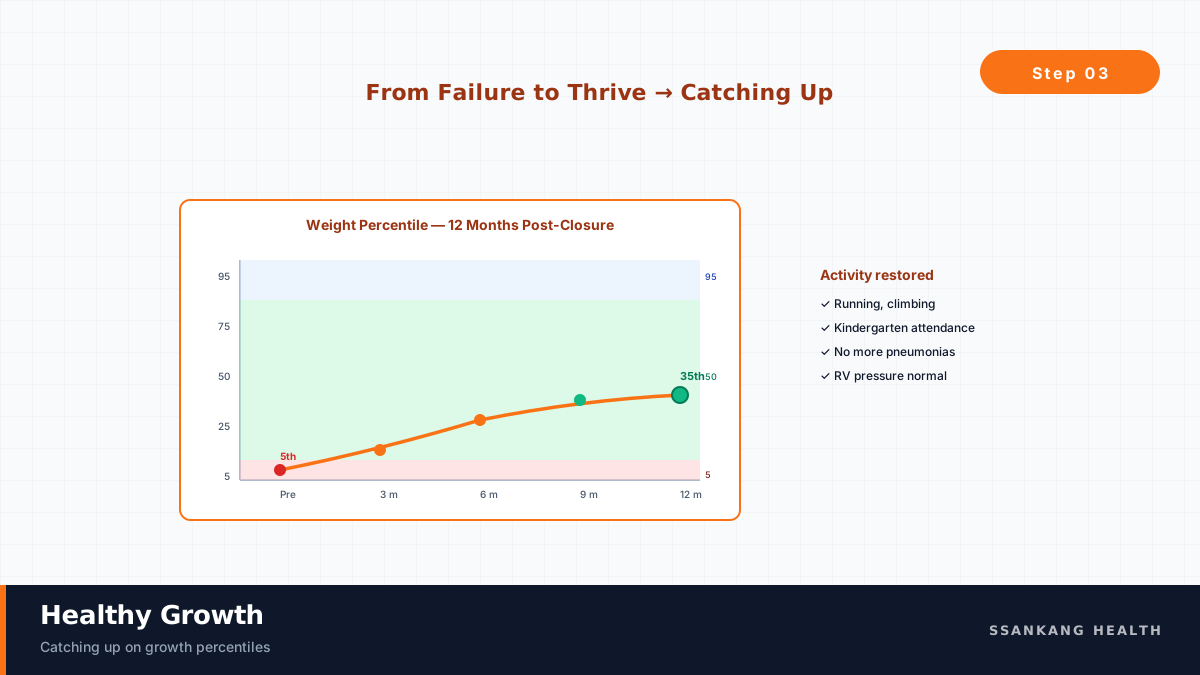
Aigerim says the hardest part was trusting a hospital in a country she had never visited. The easiest part, she says, was watching Nurlan play in the garden the day after his heart was repaired.