When Hands Stop Cooperating
Carlos Fuentes, a 47-year-old architect in Mexico City, first noticed something wrong 18 months before his trip to Beijing. He kept dropping his drafting pencils. Buttons became a struggle. Then his gait grew unsteady — his wife noticed him gripping handrails he had never needed before.
MRI revealed multi-level cervical spinal cord compression from C3 to C6, with signal changes in the cord — cervical spondylotic myelopathy. Hoffmann sign was positive bilaterally.
The Fusion Dilemma
His Mexico City neurosurgeon recommended anterior corpectomy and fusion (ACDF) with a titanium cage spanning C4-C6. This would relieve the compression but sacrifice roughly 40% of his cervical range of motion — a serious concern for an architect who spends hours at a drafting table, constantly looking between screen, plans, and scale models.
The Laminoplasty Alternative
Carlos researched the Japanese-developed open-door laminoplasty technique, which decompresses the cord from behind by expanding the spinal canal while preserving motion at each segment. Few surgeons in Latin America had extensive experience. SSAnkang connected him to a Beijing spine center where the technique was routine, with the surgeon having performed over 1,200 laminoplasties.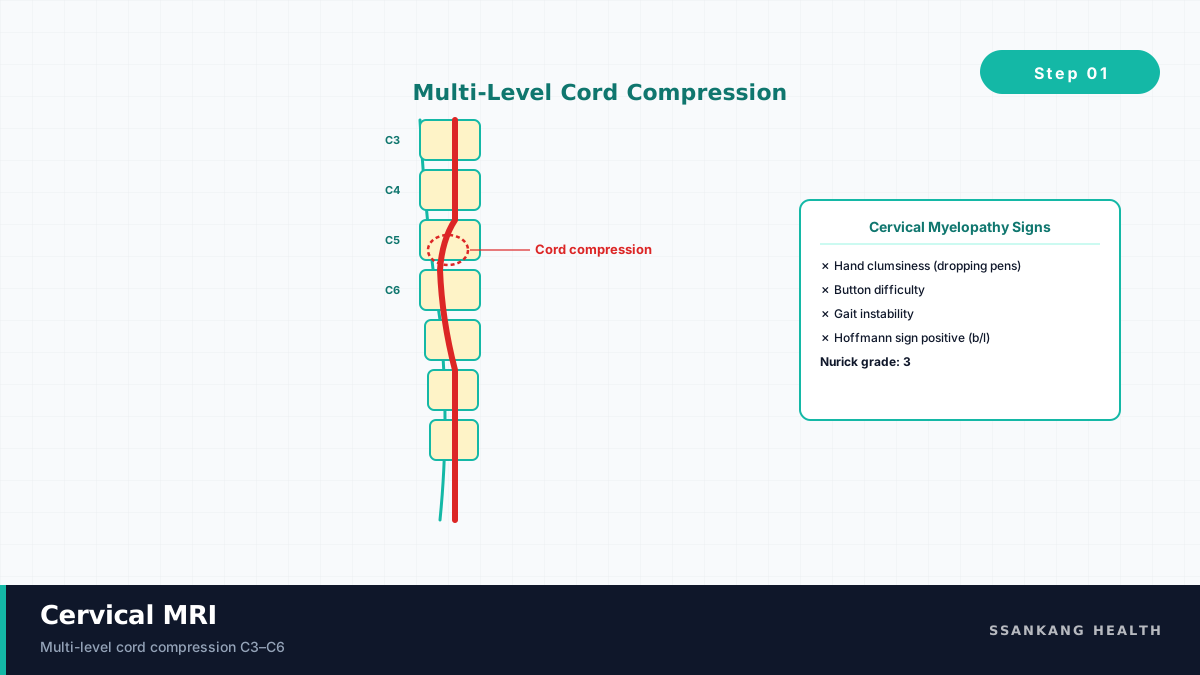
Pre-Operative Planning
Remote MRI and CT review confirmed suitability. A 3D CT reconstruction of Carlos's cervical spine was used to pre-fabricate custom titanium mini-plates and hydroxyapatite spacers to hold the opened laminae in position.
The Surgery
C3-C6 open-door laminoplasty: 2.5 hours. The surgeon hinged each lamina open like a door, expanded the spinal canal by 5-6 mm, and secured each with custom plates. Intraoperative neuromonitoring confirmed improved cord signal immediately after decompression.
Recovery
Hard collar for 2 weeks only (versus 3 months in a fusion). Day 3: hand grip strength noticeably improved. Day 7: Nurick myelopathy grade improved from 3 to 2. Discharged day 10 with daily physiotherapy for fine motor retraining.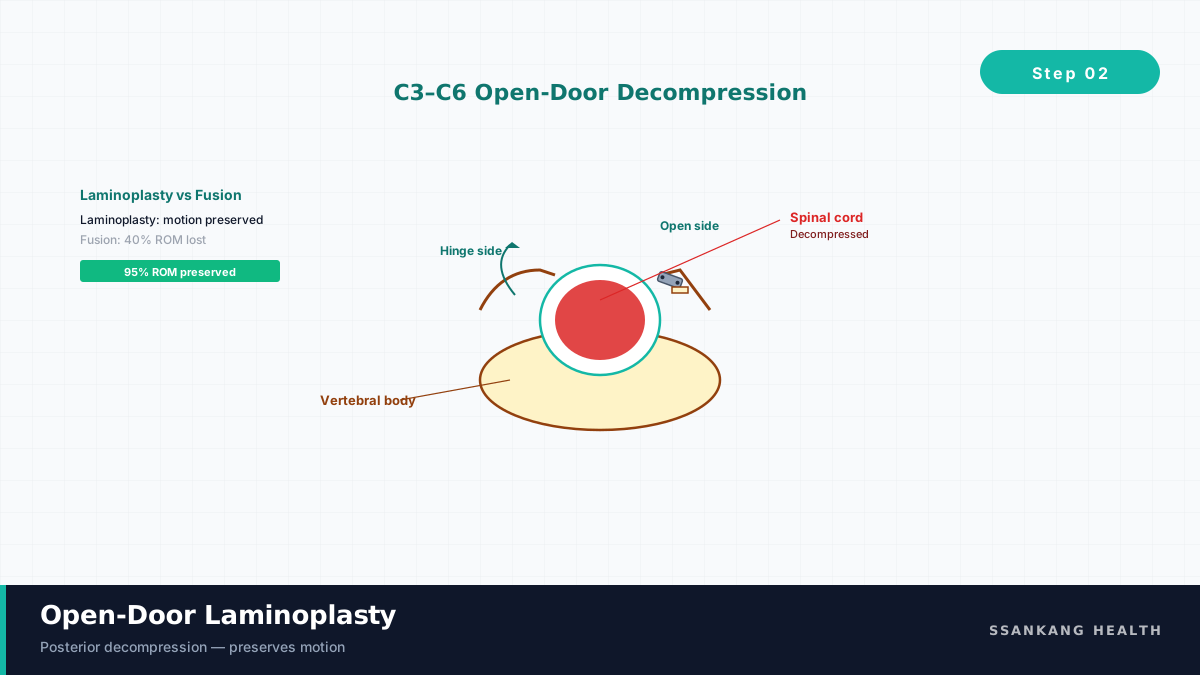
Six-Week Review
Nurick grade improved from 3 (pre-op) to 1. Hand dexterity near-normal — Carlos could manipulate his drafting tools without dropping them. Cervical rotation preserved at 95% of normal.
Six Months
Back to full-time architectural practice. Running 5K three times weekly. Full cervical rotation. MRI showed adequate canal expansion with no cord compression.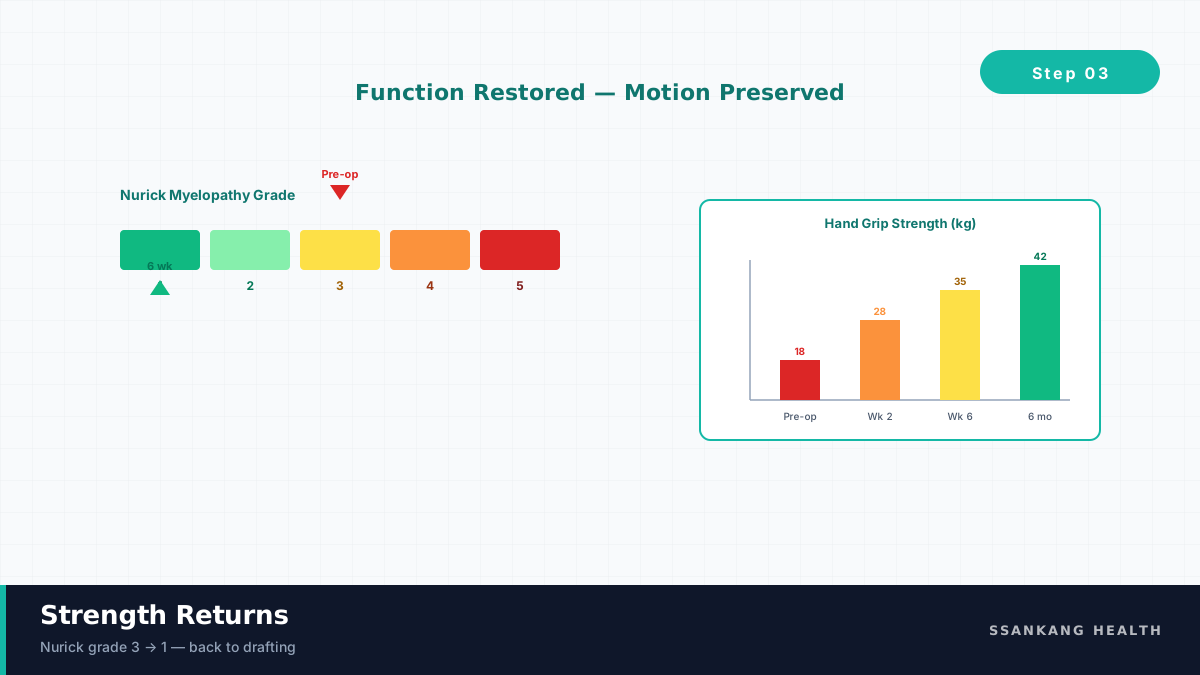
Total cost: $15,000 USD including surgery, implants, 10-day stay, and rehabilitation. Anterior corpectomy in Houston was quoted at $80,000.