The Weight of Expectation
Chidinma and Emeka Okafor married in Lagos in 2020, already parents to a 3-year-old daughter conceived naturally. When they decided to try for a second child, months turned into years. Semen analysis revealed severe teratozoospermia — only 2% normal morphology — and an elevated DNA fragmentation index (DFI) of 38%. Chidinma's workup was normal.
Three Countries, Zero Success
Two IVF cycles in Lagos: both failed at fertilization. The embryologist noted that even with ICSI, very few oocytes fertilized normally, and those that did arrested before blastocyst stage. One cycle in Mumbai: a chemical pregnancy that ended at 4 weeks. Total expenditure across three countries: over $30,000 USD. The cultural pressure in their community was immense — Emeka felt responsible, and the couple's relationship was strained.
The IMSI Difference
A fertility specialist in Lagos mentioned a technique called IMSI — intracytoplasmic morphologically selected sperm injection — which examines sperm at 6,000x magnification (versus 400x in standard ICSI). At this magnification, subtle nuclear vacuoles and head abnormalities invisible under standard ICSI become visible, allowing the embryologist to select the most structurally intact sperm for injection.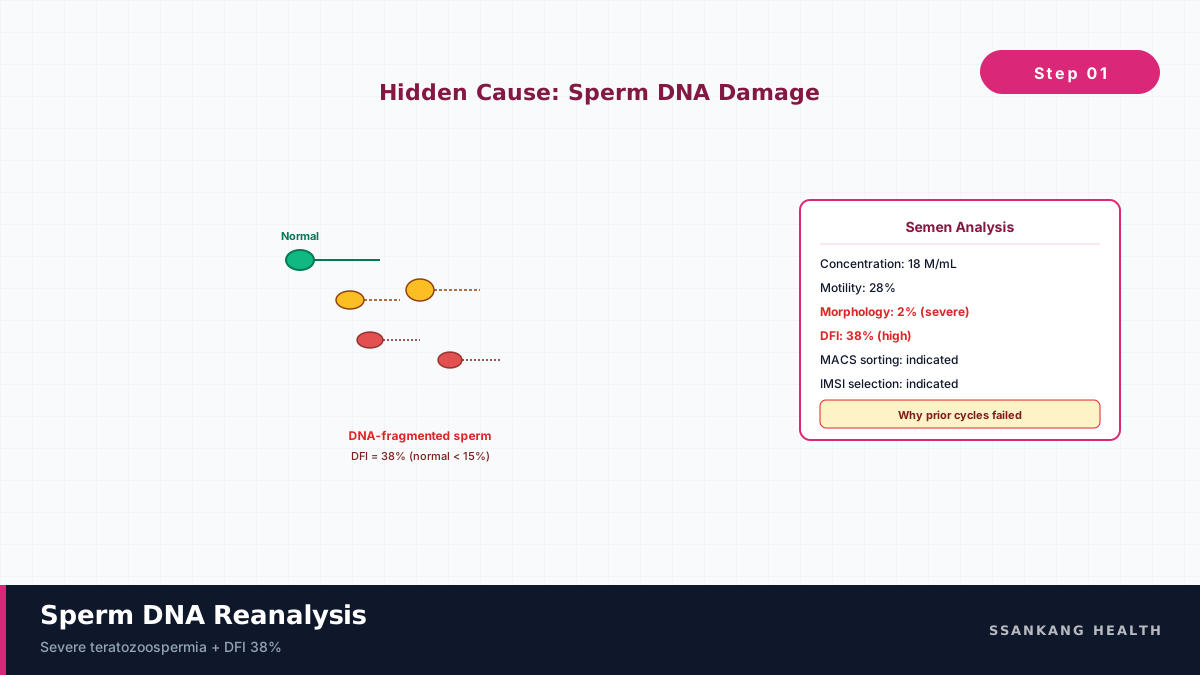
The specialist noted that very few clinics worldwide offered true IMSI, and recommended a reproductive center in Guangzhou, China, that had invested in the specialized optics and had extensive experience with severe male factor cases. SSAnkang facilitated the connection.
Guangzhou Protocol
Chidinma underwent mild stimulation (mini-IVF) to reduce her physical burden and cost, yielding 8 oocytes. Meanwhile, Emeka's sample was processed through MACS (magnetic-activated cell sorting) to remove apoptotic sperm, followed by microfluidic sorting, and finally IMSI selection at 6,000x. The difference was dramatic: under standard microscopy, his sample appeared uniformly poor. Under IMSI magnification, the embryologist identified and selected 8 structurally superior sperm cells.
A Dramatic Improvement
Six of eight oocytes fertilized normally — compared to 0-1 in previous cycles. By day 5, four had developed into blastocysts. Two were euploid on PGT-A screening.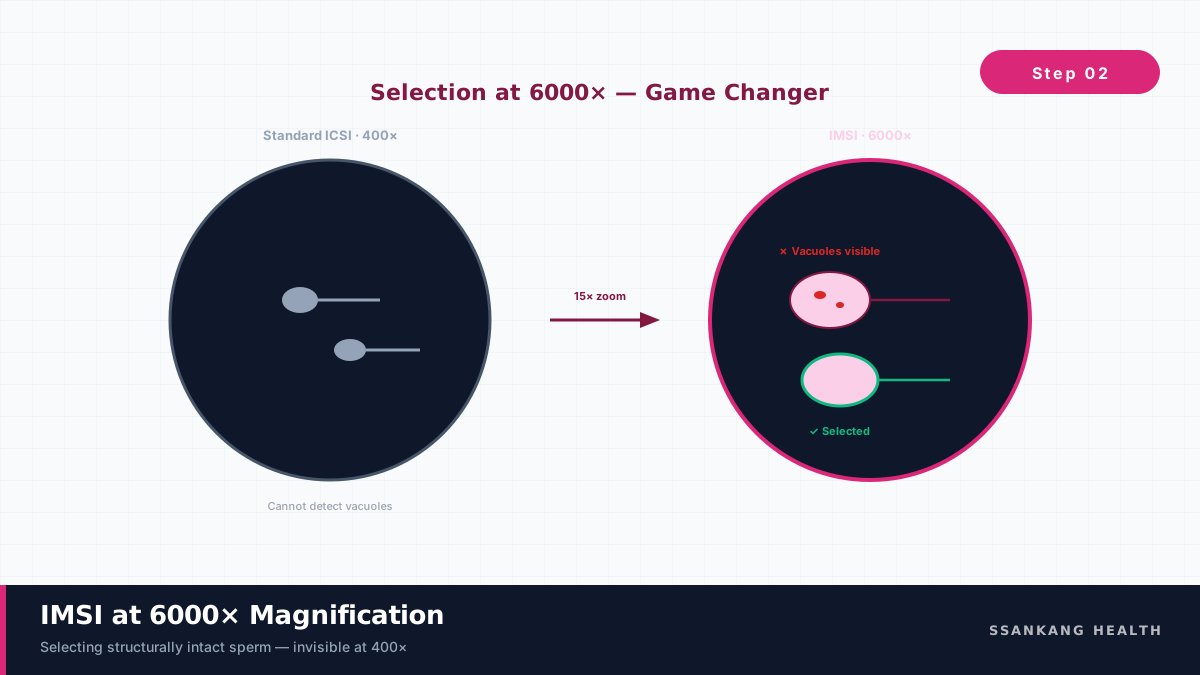
Transfer and Outcome
A single euploid embryo was transferred. Beta-hCG positive on day 11. Singleton pregnancy confirmed at week 7. Chidinma returned to Lagos at week 10 with a comprehensive care-transfer package. She delivered a healthy boy at 38 weeks.
Reflection
Total Guangzhou cost — mini-IVF cycle, MACS, IMSI, PGT-A on four embryos, medications, 3-week stay — approximately $9,500 USD. Including flights and accommodation, the total trip was under $14,000. The couple has one remaining frozen euploid embryo for a future sibling.
Emeka says the technology existed to help them all along — they just hadn't found a clinic that had it. Chidinma adds that she wishes they had known about IMSI three years and $30,000 earlier.